
Bed Bug Travel Alert
Bed Bugs & Travel - What To Know Before You Go!
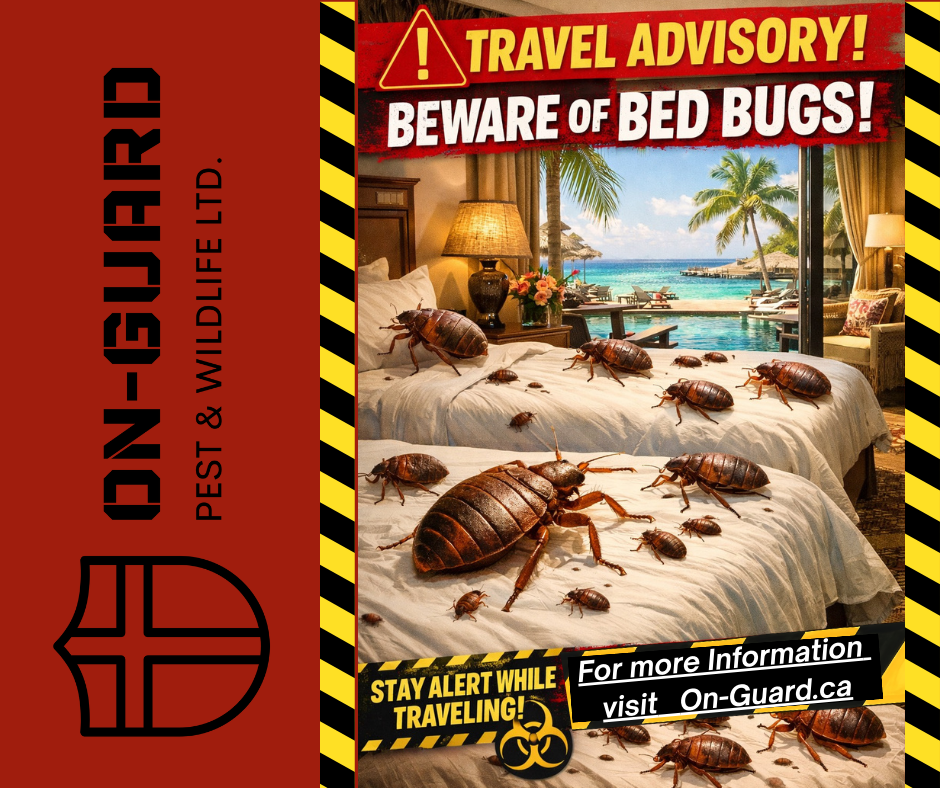
Bed Bugs
Bed bugs are small, flat, parasitic insects that feed on the blood of humans and animals. Typically, they are night feeders, hiding in bedding, furniture, and cracks during the day and emerging at night to bite exposed skin, causing itchy red welts.
Though they don't transmit diseases, their bites can cause skin irritation, and infestations can lead to anxiety and insomnia.
Bed bugs are about the size of an apple seed (1-7mm), with flat, oval bodies that become reddish-brown after feeding. They are wingless, so they can't fly or jump, but crawl quickly. They also reproduce quickly with females laying 1-5 eggs per day leading to rapid growth.
They are most active at night, attracted by carbon dioxide.
They love hiding spots such as mattress seams, bed frames, headboards, baseboards, cracks, and crevices.
Bed bugs are great travellers, hitchhiking on luggage, clothing, used furniture, etc. multiplying and spreading quickly wherever they end-up. They are a resilient pest found globally in all types of dwellings: hotels, motels, RBnBs, cabins, rentals, etc. Bed bugs have no regard for socioeconomic status; they can be just as easily found in hotels with 5 stars as those with 3 stars.
When Traveling, Be Sure To Always Follow These Steps:
1. Secure Your Luggage Immediately
- Place luggage on a luggage rack, in the bathtub or on a hard tile floor (like the bathroom). Bed bugs are less likely to hide on smooth, non-porous surfaces and struggle to climb them.
- Keep your coat and other personal items, such as purses and backpacks, on you or place them in the bathtub with your suitcase.
- Avoid the bed and carpet until your inspection is complete.
2. Systematic Room Inspection
Use your phone’s flashlight and a stiff card (like a credit card) to probe deep into crevices.
- The Bed: Pull back all linens. Focus on the mattress seams, piping, and tags. Lift the mattress to inspect the box spring, especially its wooden frame and corners.
- The Headboard: If possible, check behind the headboard where it meets the wall. Bed bugs often hide in the joints, screw holes, and crevices of the frame.
- Nearby Furniture: Inspect items within 8 feet of the bed including nightstands, upholstered chairs, and sofas. Check inside drawer joints and under cushions.
- Perimeter and Decor: Check the folds of curtains, edges of baseboards, and behind wall art or picture frames.
Signs to Look For
- Live Bugs: Adults are reddish-brown and about the size of an apple seed; Nymphs are smaller and translucent.
- Fecal Spots: Tiny dark or black spots (digested blood) that may look like ink dots from a marker.
- Blood Stains: Small rusty or reddish smears on sheets or mattresses.
- Shed Skins: Translucent, yellowish husks (exoskeletons) left behind by growing bugs.
- Odour: A sweet, musty "locker room" smell may indicate a heavy infestation.
3. What To Do If Your Find Bed Bugs
- Keep your belongings isolated.
- Contact Hotel Management and notify them of your findings.
- If you agree to move to another room, go through all the above steps in the new room.
- If you find bed bugs in the second room you may wish to request relocation to a different hotel.
4. Post-Travel Precautions
- Inspect Luggage: Check your bags outside or on a hard surface before bringing them into your home.
- Heat Treatment: Immediately wash all travel clothing in hot water and dry on the highest heat setting for at least 30 minutes; high heat is the most effective way to kill bed bugs and their eggs.
- Storage: Store suitcases in a sealed plastic bag or away from sleeping areas, such as in a garage. Vacuum out the suitcase carefully getting in all the seems, corners and pouches (be sure to empty your vacuum outside before bringing it back in the house).
- Footwear and personal items can also be hiding places for bed bugs. Wash things that can be washed and consider freezing things that cannot be washed, but could be frozen. Freeze them for at least 4 days.
FAQ
Can bed bugs spread disease?
No, bed bugs are not known to transmit diseases to humans, according to the Centers for Disease Control and Prevention. However, their bites can cause itching, allergic reactions, and secondary skin infections from scratching. The psychological impact can lead to anxiety, insomnia, and stress.
Are bed bugs only found in budget hotels?
No, bed bugs can be found in accommodations at any price point, from budget motels to five-star luxury hotels. A 2024 industry survey found that 89% of pest control professionals have treated bed bugs in upscale hotels. Bed bugs are excellent hitchhikers introduced by guests, regardless of hotel cleanliness standards.
How quickly can bed bugs multiply in a hotel room?
A single pregnant female bed bug can lay 1-5 eggs per day and up to 500 eggs in her lifetime. Under ideal conditions (68-72°F), bed bugs develop from egg to adult in 21-28 days. This rapid reproduction means even a small introduction can lead to significant infestation within 6-8 weeks.
Will washing clothes kill bed bugs that might be in luggage?
Washing clothes alone may not kill bed bugs, but washing in hot water (minimum 120°F) followed by 30+ minutes in a hot dryer will effectively kill all life stages, including eggs. The dryer’s heat is particularly crucial – it’s the sustained high temperature that eliminates these pests.
Can bed bugs survive in luggage during travel?
Yes, bed bugs can survive in luggage for several months without feeding. They can withstand temperatures from near-freezing to over 100°F temporarily. This survival ability makes post-travel luggage treatment essential, even if you didn’t see obvious signs during your stay.
When should I contact a professional pest control service?
Contact professionals if you discover live bed bugs at home after travel, find multiple signs of infestation, or experience unexplained bite patterns. Early professional intervention costs significantly less than treating established infestations and prevents spread to other areas of your home.
What physical evidence might I find on my body?
You may notice itchy, red welts on skin, often appearing in lines or clusters of 3 (“breakfast, lunch, dinner” pattern). Bites typically appear on exposed skin while sleeping. Reactions from person to person can vary significantly, even between individuals sleeping in the same bed.